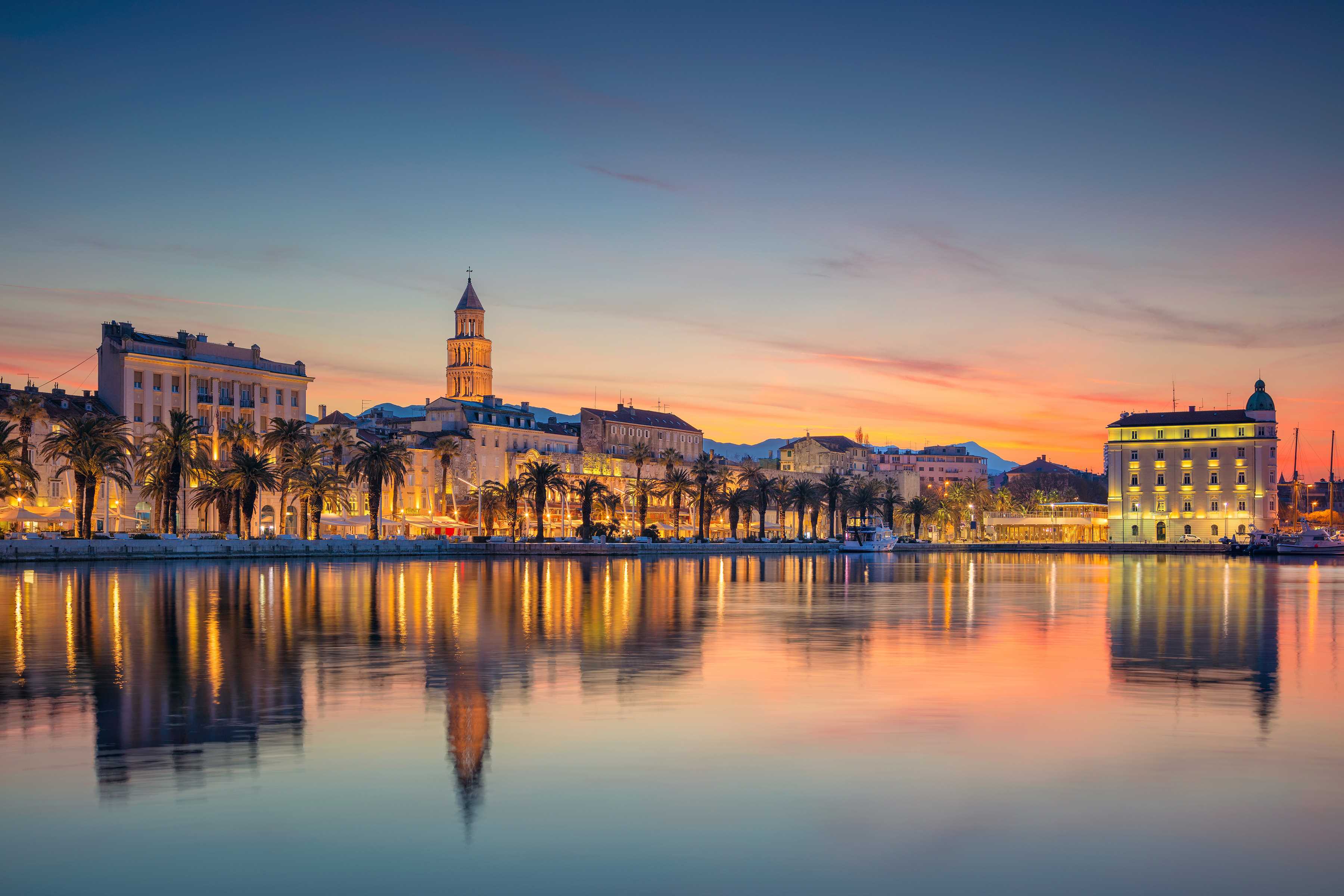
In fact in this leading tourist region of Croatia, within around thirty kilometres of each other are Diocletian’s Palace in Split itself, the largest city in Central Dalmatia, Stari Grad Plain on the island of Hvar and Trogir’s town centre, all sitting waiting for your visit. And that is not the full extent of what the United Nations Organization for Education, Science and Culture has included on its prestigious lists.
UNESCO has also put the following ‘intangible cultural heritage’ under its protection from this part of Croatia: Hvar’s agave and aloe-lace-making and is procession Za križen (following the cross), and the Sinj Alka (a traditional knightly tournament originating in Sinj in the 18th century). The list also includes Nijemo kolo (a silent circle dance) from Vrlika and Klapa singing, which is a traditional style of unaccompanied polyphonic singing, recently spread to other Croatian regions from its cradle in Dalmatia. There are numerous archaeological sites, including the well-known Solin. Solin is the biggest such site on the eastern Adriatic coast, and it is proof that there could have once been even more of these great historic monuments. It comprises the remains of the ancient town of Salona, the former capital of the Roman province of Dalmatia, and it is located about six kilometres north of Split. Away from the coast, sustainable tourism and a return to nature have been promoted by ever more popular eco-ethno villages, whereas on the coast, campsites have been promoting the same philosophy by using the plentiful sunlight to generate energy for heating, amongst other things. Campsites in Central Dalmatia are involved with and promote culinary specialities of this part of Croatia.